Thursday, 16 July 2015

Book Review: Everyday Blessings: The Inner Work of Mindful Parenting

I was curious to learn more about mindful parenting after writing a blog post about it so I turned to the expert. Everyday Blessings: The Inner Work of Mindful Parenting is written by Jon Kabat-Zinn and his wife, Myla Kabat-Zinn. Together they weave together anecdotes from their time parenting with advice and research.

Source

The book starts with introduction to mindfulness. There are many parables which they use to explain what mindfulness is, and what tools are necessary to make mindfulness work for you as a parent. The book then continues to talk about pregnancy, newborns, toddlers, children and teenagers, as well as difficulties beyond the normal scope of parenting.

My issues with the book are twofold. First, I found that a lot of what was being expounded wasn't mindfulness, but attachment theory. They even quote from Dr. Sears! While it is certainly possible to be mindful while practicing attachment theory (and there are those who would argue that you can only practice attachment theory properly if you are mindful), following the 7 Bs is not mindfulness. A lot of time in the book was spent talking about some of these Bs, with only a few sentences here and there to say that if you don't practice these Bs, you can still use mindfulness in whatever you do as a parent.

A lot of emphasis was also put on the idea that babies are only babies for so long, and so we should be more mindful of what they are experiencing and so make sacrifices for them. However, can't mindfulness also help us if we are sacrificing too much? If we are being plagued with doubts about the best course of action? If we need to step back and administer some self-care?

My other problem with the book was that it was too long. If you like a book that meanders its way to the point, stopping to tell stories and make analogies at every bend, then this is the book for you. I, however, appreciate conciseness as much as I appreciate a good analogy, and I feel like the point could have been made a lot sooner and without telling me what to do but how be mindful doing what I am currently doing.

While there are some good things to mine out of this book, I feel like it's another one of those parenting books that is destined to make you feel like you're doing it wrong. I had high hopes that I would really like this book, so I am disappointed that it is not a book I can recommend.

Thursday, 18 June 2015

Mindful Parenting

In my research on self-compassion, I came across another parenting style, Mindful Parenting. It's a style of parenting that not only has a lot of overlap with other parenting styles, but would be very compatible with other parenting styles. Carla Naumburg writes that the difference between Attachment Parenting and Mindful parenting is that Attachment Parenting "focuses on what to do (breast feed, co-sleep, etc.), while mindful parenting is about how to do it."

So what is Mindful Parenting? Mindful Parenting is a parenting style based on the concept of mindfulness. Mindfulness is about being fully present and in the moment. Jon Kabat-Zinn, a famous mindfulness researcher, describes it as paying attention in a particular way, on purpose, in the present moment non-judgmentally. Bodhipaska on Wildmind does an excellent job elaborating on this.

Source

How can parents be mindful? To pay attention to something on purpose means we are aware of our own feelings and our child's. It is not just noticing we are angry or that our child is angry, but to stay focused on the experience. We stay in the present moment, not going back to the past (remembering all the other times we yelled or all the other tantrums our child has had) or to the future (thinking that we'll never be able to stop yelling or our child will always be throwing tantrums). It is also non-judgmental (we are not getting upset with ourselves or our child for having that particular feeling). Once we are aware of what's going on, we can choose how we want to proceed rather than our usual knee-jerk reaction.

Obviously, this is a a really tall order. In fact, someone even wrote about a piece entitled "How the mindful parenting movement is setting parents up to fail" (to which a great response was written). I don't believe mindfulness sets us up to fail; I believe that mindfulness gives us tools to work with when we do fail. In fact, I believe that mindfulness is an important tool to learn how not to fail. How else can we change how we do things if we aren't aware of how and why we do them?

Mindfulness is a practice, and the more we practice at it the better we get.

For Further Thought:

1) How does this parenting style compare to compare to how you were raised? In what ways do you wish you had been more or less raised like this?

2) What appeals to you about this parenting style? What obstacles do you face in practicing this?

3) What makes you uncomfortable with this parenting style?

For Further Reading:


PsychCentral: Carla Naumburg blogs regularly about Mindful Parenting. 

Thursday, 11 June 2015

The Number One Parenting Tool That Nobody Talks About

I'd like to elaborate more on the idea of "enoughness." I think everyone (including myself) needs convincing that being hard on ourselves so we don't become lazy, narcissistic, or [insert bad thing you are afraid of becoming here] doesn't actually work. It seems like common sense that if we punish ourselves, we will want to avoid punishment in the future. We also think that if we feel bad about ourselves, the solution is to build up our self-esteem by doing wonderful things. The good news is that the research shows these things are not true. The bad news is that the real remedy to our problems still requires work.

I am a big fan of Kristin Neff. She is a researcher who has done work on self-compassion and self-esteem. Her research shows that rather than following the highs and lows of self-esteem, we should develop self-compassion instead. Self-compassion is the tool that will help us develop the sense of "enoughness" that will keep us on an even keel.

Self-compassion involves three things. The first is the recognition that we are suffering, and being kind to ourselves as a result. Instead of soldiering on through a hard day, we recognize that the day has been difficult and try to offer ourselves what we need. Instead of being angry with ourselves for yelling at our kids, we recognize that we are upset without berating ourselves. The second part is common humanity. We recognize that we are not the only ones suffering, that other parents have gone through the same things we have. The final component is mindfulness. We recognize that we are suffering and allow ourselves to feel the emotion we are feeling without wallowing in it.

Source

Obviously these three things are not easy to do. If we are used to repressing our emotions, it can be difficult to feel them again, not to mention the difficulty in not getting carried away by them. However, practicing self-compassion is the only way off the worthiness hamster-wheel. We cannot effect real change in ourselves without it.

For Further Thought:

1) What are you afraid of becoming if you don't keep yourself in line?

2) What are you worried will happen if you allow yourself to feel the full extent of your feelings?

3) What do you think is your biggest obstacle in practicing self-compassion?

For Further Reading:

"Self-Compassion" by Kristin Neff (watch her TED talk here)

Self-Compassion:  What Self-Compassion is Not and Why We Should Stop Chasing Self-Esteem and Start Developing Self-Compassion and Does Self-Compassion Mean Letting Yourself Off the Hook?

Thursday, 4 June 2015

Enough

I have a love-hate relationship with Pinterest. On the one hand, I love that it's a place for me to keep all the recipes I'm interested in trying, as well as all the other virtual things I like to hoard. On the other hand, when I get caught up looking at all the activities I feel like I should be doing with my kids, well...

Being a parent is hard work. Our ability to see what other parents are doing and compare our beginnings to other people's middles certainly doesn't make it any easier. We read blog posts detailing messy crafts and sensory bins, we see pictures of our friends and families going on outings and we think, "I should do that." If we only used these sources to get inspired, it would be one thing, but more often we are using them as a meter stick, to see how we measure up. The real challenge, however, is not avoiding comparison, it is avoiding the "worthiness hustle" altogether.

I'm a big fan of the work of Brené Brown. She is a researcher who came across interesting findings regarding shame. Her has been featured on Oprah. She believes (and has the research to back it up) that as long as we feel like we have to do things to be worthy (what she calls the "worthiness hustle"), we will never achieve it. However, once we decide that we are enough, just as we are, we are.

by Kelly Rae Roberts Source 

We think that we can harness the power of shame. We think that if we beat ourselves up enough about all the things we didn't do but should have and all the things we did do but shouldn't have that we can make ourselves better. It just doesn't work that way. Furthermore, if we are constantly berating ourselves we will not feel motivated to take care of ourselves. We will not feel like we deserve it or be able to take in all the wonderful things life has to offer. How can we parent from emptiness?

You, dear parent, are enough, just as you are. Don't forget that.

For Further Thought:

1) What things do you do to hustle for worthiness?

2) How would it change your life to know that you no longer had to hustle for your worthiness?

3) Our children are our best teachers. Do you expect them to work for their love from you? Why do you make yourself work for it?

For Further Reading:

"I Thought It was Just Me" and "The Gifts of Imperfection" by Brené Brown (watch her TED talks on The Power of Vulnerability and Listening to Shame)

Aha Parenting: Spring Cleaning for your Psyche

Barefoot Barn: The Mistaken Belief Moms Hold

Abundant Mama: A Mindful Mother's Guide to Feeling Worthy

Hands Free Mama: The Kind of Mothering We All Need

Finding Joy: Why Being a Mom is Enough and Dear I am Enough Mom

Thursday, 28 May 2015

First Things First: Self-Care

Source

Or so the cliche goes. Does anyone else wonder if they were in an emergency situation on an airplane with their kids if they would actually put their own oxygen masks on first?

I've been procrastinating thinking really hard about writing this post because I don't feel qualified to write it I really wanted to do it justice. It amazes me how something so important can be so difficult to do.

So, what is self-care, and why is it necessary?

Self-care means that we take care of ourselves. That we fill our own cups so we are better able to fill the cups of others. Self-care is necessary because we are not an infinite source of energy. We need to take time to renew ourselves and be ourselves to be our best selves. While there is this feeling that we have to "do it all" (whatever that means) and put everyone else first in order to be a good parent, the only thing we will succeed in with that mentality is burning out. Not to mention having a crisis when being a parent is no longer our primary responsibility.

Often we feel like we don't have time to take care of ourselves. It's important to remember that while there will always be another load of laundry or another plate to wash, your energy will not always be there. You will never find time to take care of yourself; it's something you have to make time for.

Self-care can mean different things to different people. It isn't something that has to take a lot of time or cost a lot of money. While self-care can mean an afternoon at the spa, it also means all the little day-to-day things we do for ourselves. At a play date, one mother expressed that she always made sure to put lotion on her daughter, but never put it on herself. So self-care can mean something as simple as putting lotion on every day.

Our children are our best teachers. If you're not sure what nice things you can do for yourself, just think of all the things you do for them. How we care for them also shows us how to find the balance between self-care and self-indulgence.

Self-care means:
  • We feed ourselves nourishing foods, but occasionally we indulge in treats.
  • We dress ourselves comfortably, but occasionally dress up
  • We take care of our hygiene needs, like bathing, brushing our teeth and putting on lotion, but recognize the need for a pajama day now and then (a really nice thing you can do for yourself is close the bathroom door when you go!)
  • We go out and do activities that we enjoy, and sometimes just hang out at home
  • We tidy up our space, but sometimes forgo doing the dishes for a nap
  • We make time for our own creative pursuits like writing, music or art 
  • We make time to see our friends, but respect our need for solitude
  • We make time to move our bodies in ways that feel good, but sometimes we become one with the couch

If you can't manage to take care of yourself for your own sake, think of your children. Your goal is for them to eventually be able to do all the things you do for them for themselves. If they aren't able to see you do these things for yourself, how will they know it's OK for them to take care of themselves?


"When we feed and support our own happiness, we are nourishing our ability to love. That’s why to love means to learn the art of nourishing our happiness."
                                                 - Thich Nhat Hanh


For Further Thought:

1) What are things you make sure to do for your children that you don't do for yourself?

2) What are some small things you can do for yourself that you can incorporate into your daily routine? For example, taking deep breaths, stretching, putting on lotion.

3) What beliefs are getting in the way of you taking care of you? ("I don't have time" doesn't count. Nobody *has* time. We make time for the things we think are important.)

For Further Reading:

HuffPo: The Quickest Way to Tear Down an Entire Family

Regarding Baby: Take Care of Yourself

Aha Parenting: The Secret of a Full Cup

Abundant Mama: Two Self-Care Myths Sabotaging Your Me Time
(I highly recommend the Abundant Mama E-Course!)

Barefoot Barn: Drop the Mama Guilt and Get Resourced

Abundant Life Children: Caring for My Children, Caring for Myself

Core Parenting Pdx: Learning to Care for Ourselves

Christie Inge: Podcast: Honoring Your Needs in a Busy World 

Presence Parenting: It's OK to Need Time Alone

Thursday, 26 March 2015

Parenting Isn't Easy

I think the other reason why we think we're doing parenting wrong is because it's hard. If we were doing it right, it would be easy, wouldn't it?

The thing is, parenting is hard work. Even on the days when everything goes right, parenting is hard work. Even when the sun is shining, parenting is hard work. Even when the kids are behaving, parenting is hard work.

Source

But we do it. We go to bed, tired and worn out (and probably too late) and we get up the next morning tired and worn out and we do it again. And again. And again.

I think it's important to tell ourselves that parenting is hard work. That maybe it's supposed to be hard. That maybe we don't need anything fixed, that we're not doing anything wrong, we don't need to tweak anything, that it's just hard. But you're still doing a good job.

Parenting is hard because it is physically tiring. Our kids have boundless energy and require near-constant attention. Some of them don't sleep through the night. Some of them are going through a difficult phase. Some of them have been going through a difficult phase since birth. Some of them are high-spirited. All of them want us to play with them, to get down on our hands and knees or to run and chase them or to go outside to the park.

Parenting is hard because it is mentally tiring. We read books and articles, and discuss it with our friends. We learn like we are preparing for the biggest exam of our life, except that there are multiple textbooks and they don't always agree with each other. We create a plan of action, and wonder as it plays out if this was the right course. And then we wonder if our problem is all this flip-flopping. Just as we're getting the hang of things, everything changes, requiring new research into new problems.

Parenting is hard because it is emotionally tiring. We walk around every day with our hearts outside our bodies. We worry about all the bad things that can happen to our children, and if we're one of them. We worry that we love them too much, and they'll grow up to be over-entitled spoiled brats, or that we don't love them enough, and they'll grow up to be (fill the the blank with your worst nightmare).

Why do we pretend parenting is easy when it's not? Why do we beat ourselves up for working a hard job, instead of congratulating ourselves for it? Parenting is hard work. Good on you for doing it, however you're doing it.

For Further Thought:

1) Do you equate easy with right and hard with wrong? What would you say to your child who thought that because they were having a hard time with something, they were doing it wrong?

2) How do you acknowledge the hard work that you do?

3) In what ways do you compare yourself with other people who seem to find parenting easy? In what ways do you think that other parents might think you find parenting easy?

For Further Reading:

Every Chance to Learn: Why Modern Parenting is Hard
Barbara Vogelgesang: Sometimes Being a Parent is Just Plain Hard
Finding Joy: Dear Mom Letters
Deciphering Morgan: Parenting is Hard
Core Parenting: The Parenthood FairyTale
Happiness is Here: Gentle Parenting Isn't Meant to be Easy

Thursday, 26 February 2015

It's Not Working! 6 Tips to Tweak Your Parenting

You've picked your path. You're doing what works for you and it feels right. But how do you know it's working?

In an ideal world this question would be easy to answer. Your kids would be perfectly behaved, and there would be no need to second guess yourself. In the real world, however, your kids are not going to behave perfectly 100% of the time, no matter what parenting method you choose. Like us, kids are human. They are not perfect. They're going to mess up.

So how do you know it's working? I came across the Pareto Principle on AskMoxie, one of my favourite parenting blogs (I like it because she also has the attitude that you are the best parent for your child, which is also the title of the book she wrote). The Pareto Principle is also known as the 80/20 rule. In business, it means focusing 80% of your energy on the 20% most important things. In parenting, it means that as long as things are good 80% of the time, you can ignore the other 20% of the time when things go to pot. Read Kara at Simple Kids' post to learn more.

Sometimes, though things are not working even 80% of the time. Regardless of your parenting style, here are a few tips to tweak your parenting:

1) Change your perspective: Keep your expectations reasonable. Your child can't behave all the time. Try not to take it personally, and try to see them as someone who made a mistake and is in need of guidance rather than a malevolent being that needs to be taught a lesson.

Source

2) Remember the Big Picture: Sometimes they're just going through a phase. Take a deep breath and remember that this too, shall pass. Behavior is Not as Important as We Think.

3) Connect: if your child feels disconnected from you, they will be less likely to listen. Even 15 minutes a day of undivided attention can make a big difference.

4) Stay Calm: how can we expect our children to maintain their tempers if we can't? Children are more likely to listen when we can discipline calmly.

5) Keep it Simple: The less words you use to communicate, the better.

6) Mean what you say: If you say you're going to give consequences, give them.

For Further Thought:

1) How would you apply AskMoxie's take on the Pareto Principle to your parenting? What 20% of your life is giving you 80% of your trouble?

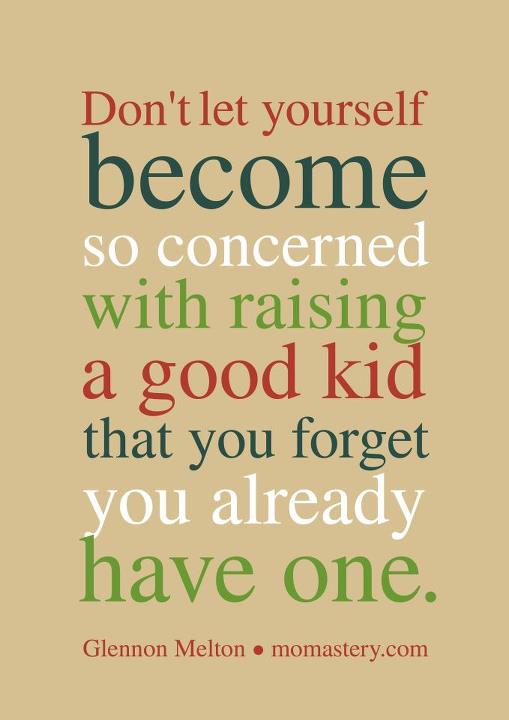
2) What do you love about your child? What things do you sometimes forget about them that make them a "good child?"

3) What "phase" is your child going through at the moment? What would be helpful for you and your child as you pass through this part of their life?

For Further Reading:

Love and Logic: It's Not Working
Janet Lansbury: If Gentle Discipline Isn't Working, This Might Be The Reason, Problems with Gentle Parenting and Common Toddler Discipline Mistakes
AhaParenting: Obedience: Why Do You Have To Tell Them Five Times? and 12 Ways to Get Past No
Not Just Cute: Six Ways You’re (Unintentionally) Telling Kids NOT to Listen
Positive Parenting Connection: When a Parenting Tool is Not Working
Huffington Post: 7 New Ways to Navigate Defiance From Your Child
The Genius in Children: Why Kids Listen to Parents or Don't